Your new mountain home theater looks incredible. The screen is massive. The speakers are perfectly placed. The leather seats are positioned exactly right. But something feels… off. The bass doesn’t quite punch the way it should. The equipment rack runs hot, even with the AC blasting. And during your first movie night, the system shut itself down mid-film.
Welcome to home theater integration at altitude.
After designing and calibrating hundreds of dedicated theaters across Colorado’s high country, we’ve learned that elevation creates challenges most integrators never consider. At 8,000 to 10,000 feet, the physics of sound reproduction and equipment operation change in ways that affect everything from speaker selection to rack ventilation. Understanding these differences transforms a frustrating experience into something genuinely remarkable.
What Happens to Sound at Elevation
Sound travels through air. When you reduce air density by 25% or more (as happens above 8,000 feet), you fundamentally change how sound propagates through a room.
The effects are subtle but cumulative. Lower air density reduces acoustic damping, allowing sound waves to travel slightly farther before losing energy. This can make a room feel brighter or more reverberant than identical dimensions would produce at sea level. Bass response, which depends heavily on moving large volumes of air, requires recalibration to achieve the same perceived impact.
Standard calibration approaches assume sea-level conditions. Every reference curve, every target response, every factory preset was developed at elevations where most people live. In Colorado’s mountain communities, those assumptions no longer apply.
Professional calibration at altitude requires adjusting for these differences. Room correction systems like those from Storm Audio or the advanced DSP processing available in Wisdom Audio’s dedicated cinema products can compensate, but only when the technician understands what they’re compensating for. This is where experience in mountain installations becomes invaluable.
The Equipment Challenge Nobody Mentions
Electronic equipment generates heat. Cooling systems dissipate that heat by moving air across components. At altitude, thinner air carries less heat per cubic foot, reducing cooling efficiency by 15 to 20 percent or more.
A processor or amplifier that runs comfortably at 85 degrees in a Denver metro installation might hit thermal shutdown at 9,000 feet in a ski home. The equipment isn’t defective. It simply wasn’t designed for these conditions.
This reality shapes how we approach equipment room design for mountain properties. Standard rack ventilation becomes inadequate. Passive cooling transforms into active climate control. Equipment spacing increases to allow better airflow. Some components require derating to operate within safe thermal limits.
The solution isn’t complicated, but it requires forethought. We design equipment rooms with dedicated HVAC capacity beyond what the space’s square footage would suggest. Strategic fan placement creates positive airflow through racks rather than relying on natural convection. Temperature monitoring alerts us to problems before they cause shutdowns.
Why Mountain Home Acoustics Are Different
Colorado mountain homes present acoustic challenges that suburban theaters rarely encounter.
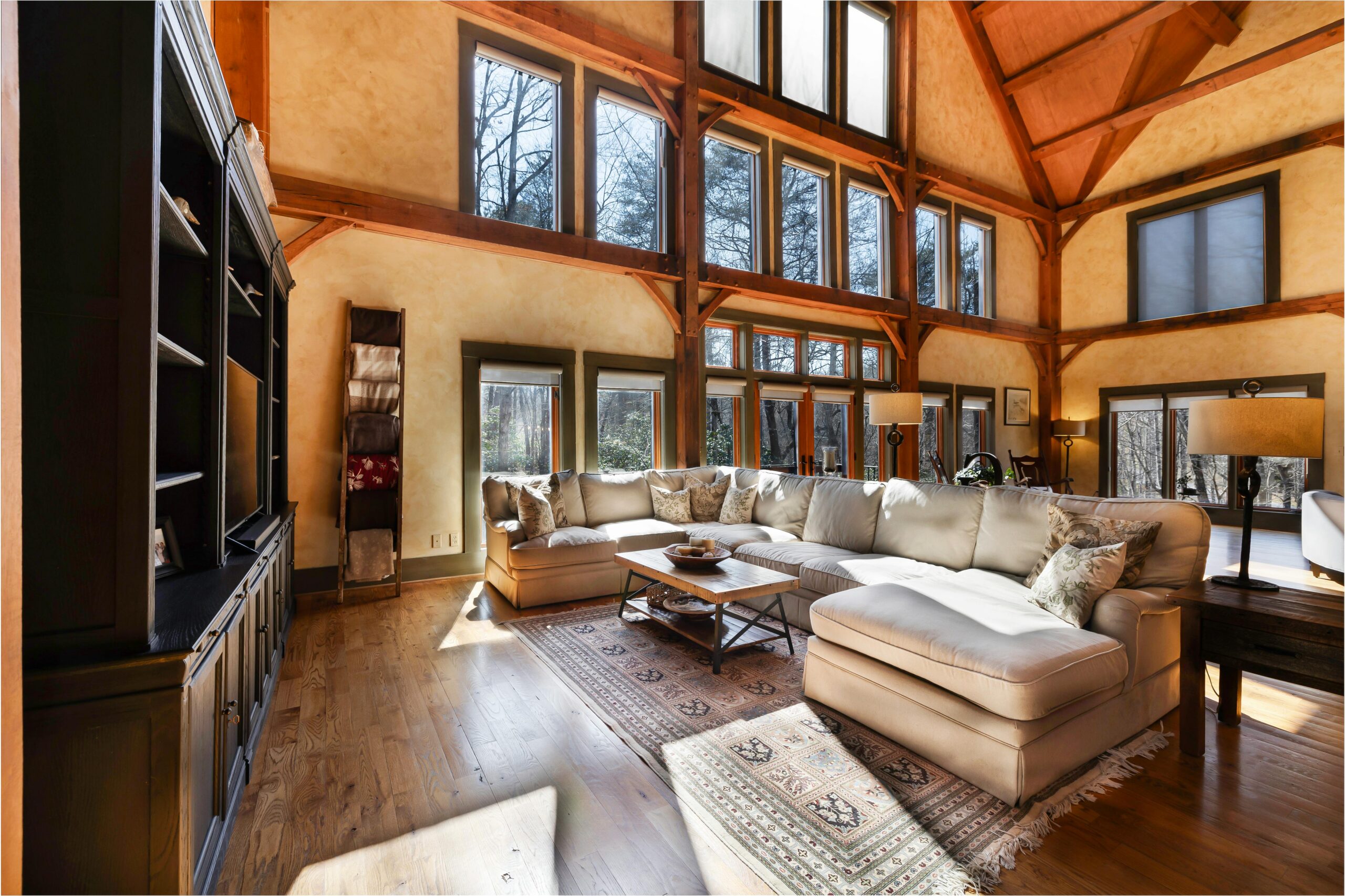
Vaulted ceilings and exposed beams create complex reflection patterns. Sound bounces unpredictably off timber trusses and angled surfaces, making speaker placement and acoustic treatment more critical. Standard rectangular room calculations don’t apply when your ceiling peaks at 25 feet.
Extensive glass for capturing mountain views introduces acoustic transparency and flutter echo. Sound passes through windows differently than through drywall, and reflections between parallel glass surfaces create audible artifacts in certain frequency ranges.
Heavy timber and stone construction changes how low frequencies interact with room boundaries. Mass-loaded walls don’t flex the same way standard drywall assemblies do, affecting bass response throughout the listening area.
Irregular room shapes common in custom mountain architecture require speaker systems designed for flexibility. Standard five-channel or even basic Dolby Atmos configurations may not adequately cover seating areas in rooms with unusual geometries.
These challenges aren’t insurmountable. They simply require different approaches than cookie-cutter theater design.
Speaker Selection for Challenging Spaces
Architectural speakers from partners like James Loudspeaker and Wisdom Audio excel in mountain home applications precisely because they’re designed for difficult installations.
James Loudspeaker’s shallow-mount architectural series fits into timber-frame construction where standard speaker depths won’t work. Their outdoor-rated products extend entertainment to decks and patios without sacrificing the build quality demanded in premium installations.
Wisdom Audio’s planar magnetic designs deliver extraordinary detail and imaging in rooms where conventional dynamic speakers struggle. Their ability to control dispersion patterns helps tame reflective spaces that would defeat lesser systems.
For comprehensive immersive audio, configurations ranging from 7.1.4 to 14.1.6 Dolby Atmos create the enveloping experience that dedicated theaters deserve. Sonance’s in-ceiling speakers handle height channels invisibly, while Theory Audio’s architectural solutions provide serious output from surprisingly compact enclosures.
The key is matching speaker selection to room characteristics rather than forcing a standard configuration into a nonstandard space.
Display and Projection at Altitude
Colorado’s 300+ sunny days annually complicate video system design. Mountain homes with dramatic window walls face extreme contrast ratios between bright ambient light and the darkness immersive viewing requires.
Motorized shading from Lutron addresses this challenge by controlling natural light with precision. Palladiom systems integrate with home automation to create theater-ready darkness at the touch of a button, then restore views when the credits roll.
For dedicated rooms, Sony’s reference-grade laser projectors deliver the brightness (3,400+ lumens in flagship models) needed to overcome ambient light challenges while maintaining the deep blacks critical for cinematic presentation. Paired with Stewart Filmscreen’s acoustically transparent materials, these create projection experiences that rival commercial installations.
Video processing from madVR Labs represents the current pinnacle of image optimization. Their tone mapping algorithms squeeze maximum performance from every source, compensating for room conditions that affect perceived image quality.
Samsung and LG OLED displays excel in multipurpose spaces where dedicated projection isn’t practical. The self-emitting pixel technology produces absolute blacks regardless of viewing room lighting conditions.
Control and Integration That Actually Works
A dedicated theater involves dozens of components that must work together seamlessly. Lights need to dim. Shades need to close. Sources need to switch. Audio needs to route correctly. Climate needs to adjust. All of this should happen invisibly when someone selects “Watch a Movie.”
Crestron and Savant automation platforms excel at this kind of sophisticated orchestration. A single button press triggers a precisely timed sequence: shades descend, lights fade, the screen lowers, the projector warms up, and the receiver switches to the correct input. When the movie ends, everything reverses.
Control4 provides similar capability at a different price point, making professional-grade automation accessible for projects where Crestron’s enterprise-level feature set exceeds actual requirements.
The critical factor isn’t which platform you choose. It’s whether your integrator programs the system thoughtfully. Automation should anticipate what you want, not force you through menus and mode selections. Great programming makes complex systems feel simple.
The Second-Home Reality
Most mountain home theaters sit unused for months at a time. This extended vacancy creates unique challenges that don’t affect primary residences.
Equipment that operates continuously stays warm and stable. Equipment that powers on after months of inactivity experiences thermal shock, condensation concerns, and component stress. Proper system design accounts for these usage patterns.
Remote management through platforms like Savant’s Pro X enables monitoring and adjustment without requiring site visits. Firmware updates, system health checks, and even basic troubleshooting can happen from anywhere. When homeowners arrive after months away, their theater works exactly as expected because we’ve been maintaining it remotely.
This capability matters enormously for properties in remote mountain locations where service calls require significant travel time. Problems get identified and resolved before they affect the owner’s limited time at the property.
What This Means for Your Project
Building or renovating a mountain home theater differs fundamentally from projects at lower elevations. The physics change. The equipment requirements change. The acoustic challenges intensify.
Success requires an integrator with specific experience in high-altitude installations. Someone who understands why standard approaches fail and knows which alternatives actually work.
We’ve spent decades learning these lessons across Colorado’s luxury mountain communities. Every challenging project has taught us something new about creating exceptional theaters in extreme environments. That accumulated knowledge shapes how we approach each new installation.
The altitude creates challenges. It also creates opportunities for something genuinely special. Done right, your mountain home theater delivers an experience you simply cannot replicate elsewhere.