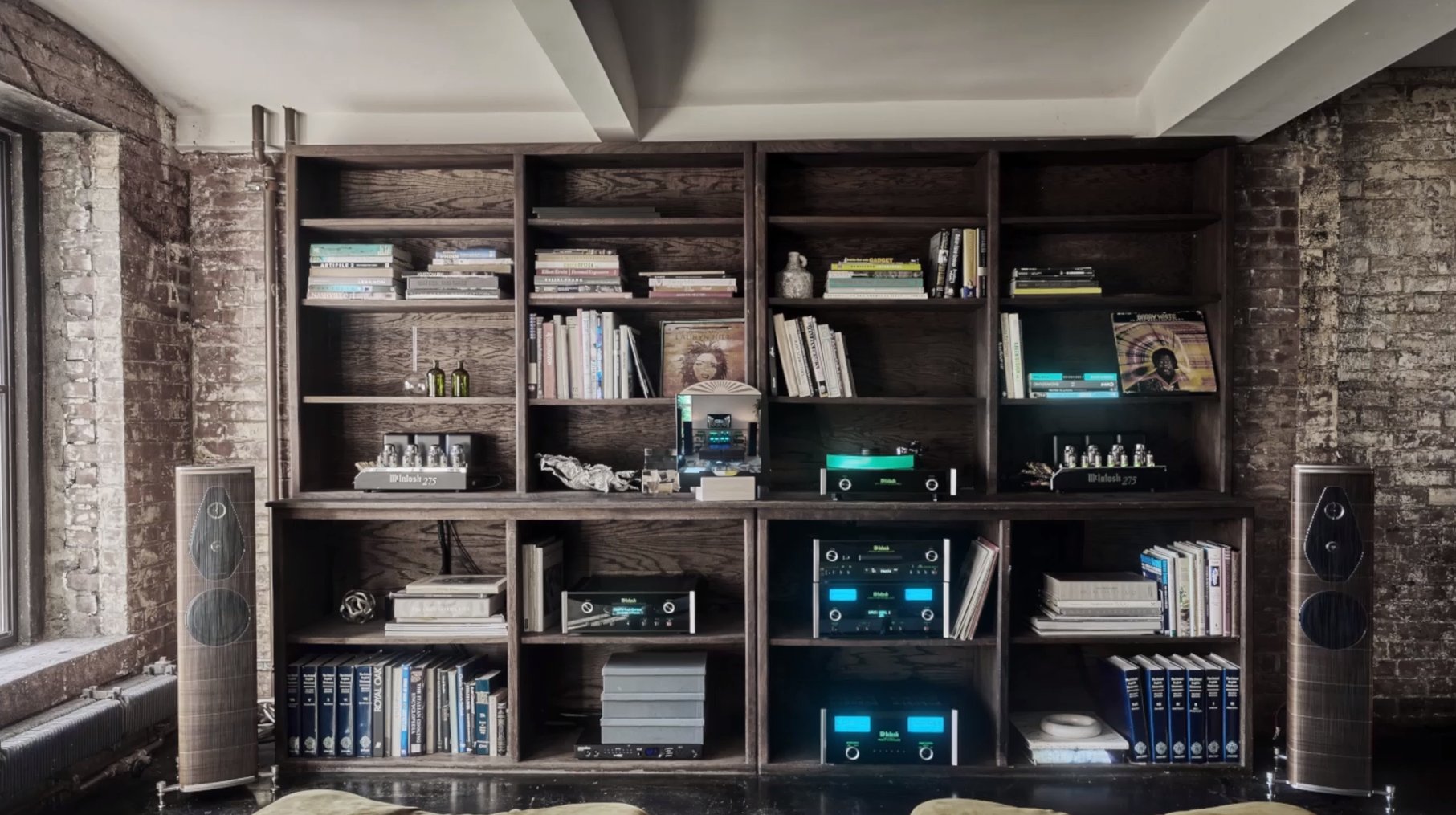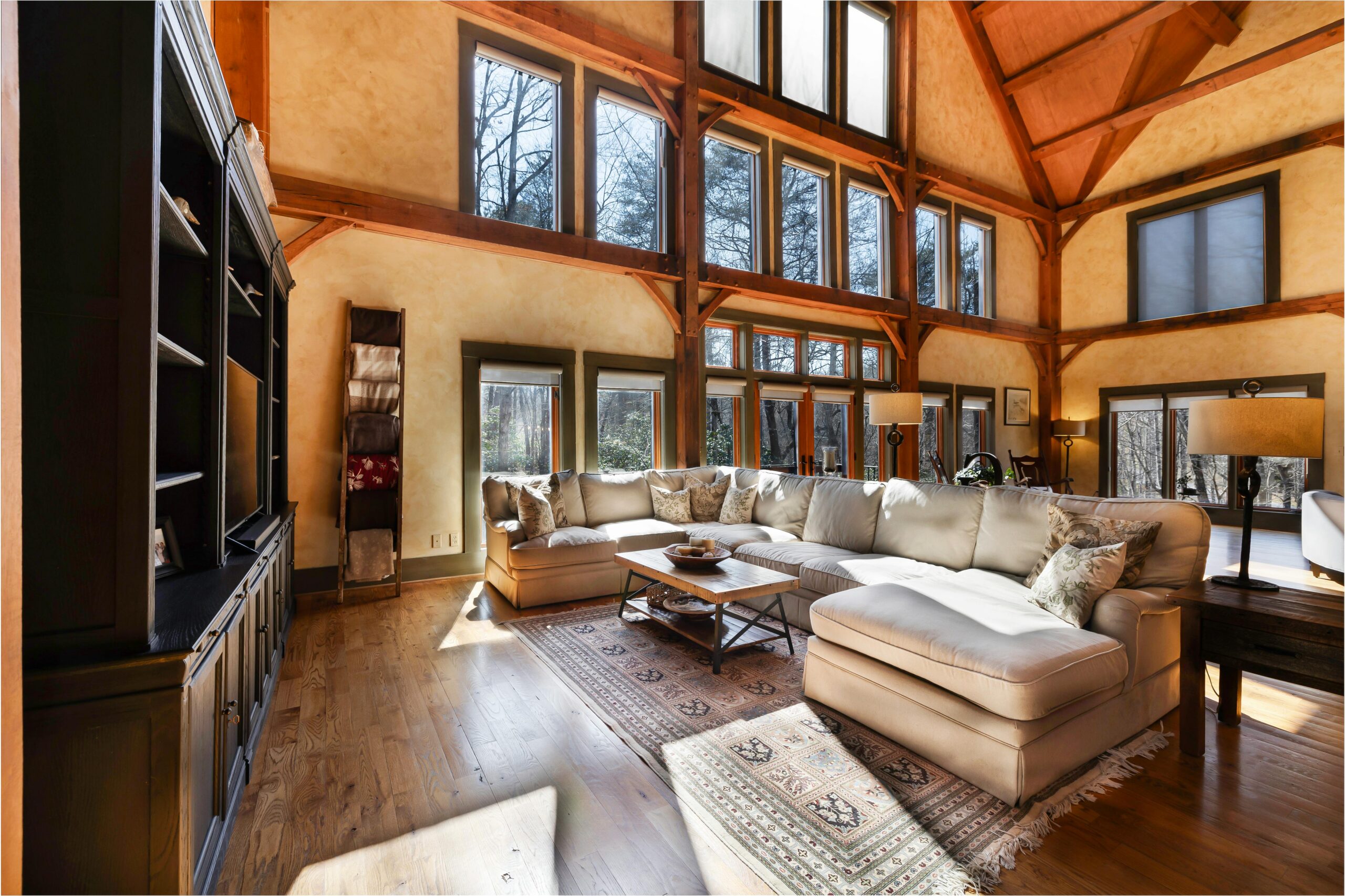
Then you turn on music. And it sounds like you’re listening inside a parking garage.
This is the great room acoustic problem. It affects nearly every mountain home we work on. The same design elements that make these spaces visually stunning create acoustic environments that fight against audio quality, speech clarity, and everyday comfort.
The good news: acoustic engineering solves it. But only when the right people get involved at the right time.
The Physics Working Against You
Sound behaves differently in a great room than in any other space in your home. Understanding why helps explain why standard audio approaches fail here.
A typical great room in Colorado mountain architecture features ceilings between 20 and 30 feet. That volume of air creates reverberation times exceeding 2.5 seconds without treatment. For reference, a well-designed listening room targets 0.4 to 0.8 seconds. A cathedral averages around 3 seconds.
That reverberation is only part of the problem. Three materials dominate mountain home construction: glass, stone, and timber. All three reflect sound rather than absorbing it. Glass reflects nearly 97% of the sound energy that hits it. Stone reflects over 95%. Even heavy timber reflects around 85%.
Now add the open floor plan. Your great room likely connects to the kitchen, dining area, and possibly a hallway or loft above. Sound doesn’t respect the invisible boundaries between these zones. Music playing in the living area competes with conversation at the dining table, kitchen noise bleeds everywhere, and the loft above acts as an echo chamber.
Colorado adds another variable most integrators overlook. At 8,000 to 10,000 feet, humidity sits between 25% and 35% for most of the year. Sea-level environments average 50% to 60%. Lower humidity changes how sound propagates through air. High frequencies attenuate faster. Bass frequencies behave differently in the reduced air density. Calibration profiles developed at sea level simply don’t apply.
What Standard Audio Approaches Get Wrong
Most audio installations treat great rooms like oversized versions of normal rooms. They place speakers in the ceiling at regular intervals, wire them to an amplifier, and call it done. This approach fails for three specific reasons.
Speaker placement ignores the ceiling. In-ceiling speakers in a 25-foot vaulted ceiling project sound from too far above the listening position. The direct-to-reflected sound ratio drops, and intelligibility suffers. Conversation becomes difficult when background music plays because the reflected energy overwhelms the direct signal.
Single-zone treatment ignores room function. A great room serves as living room, entertaining space, casual dining area, and sometimes home office throughout any given day. A single audio zone with one volume level and one source can’t serve these overlapping uses.
No acoustic treatment means no acoustic control. Without absorptive materials strategically placed, electronic processing alone can’t overcome the fundamental physics of a 15,000-cubic-foot reflective space.
Designing Audio That Works in the Space
Solving the great room acoustic problem requires a three-layer approach: architectural coordination, speaker engineering, and electronic processing. Each layer addresses different aspects of the challenge, and all three must work together.
Architectural Coordination
This is the layer most often skipped, and skipping it costs more than any other single decision.
Acoustic treatment doesn’t have to look like a recording studio. Absorptive materials hide effectively behind acoustically transparent fabric panels that match interior finishes. Reclaimed wood slat walls provide both visual texture and sound diffusion. Strategic furniture placement creates absorption zones. Even the choice between a wool area rug and a hardwood floor changes the room’s acoustic character.
The key is involving an integrator during schematic design, not after drywall. Acoustic treatment requires backing and mounting coordination with framing. Absorptive panels need structural support behind finished surfaces. Speaker locations must align with beam spacing, HVAC duct routing, and lighting plans.
On a recent Colorado project, the architect planned a floating timber ceiling detail in the great room. By coordinating during design development, we integrated acoustic absorption panels between the timber members. The finished result looked intentional and architectural. The room’s reverberation time dropped from 2.8 seconds to 0.9 seconds. No visible treatment. No compromise to the design vision.
That coordination window matters financially too. Adding acoustic infrastructure during framing costs a fraction of retrofit work after finishes are complete. In mountain modern architecture, where exposed structure and minimal trim eliminate access points, post-construction modification becomes extraordinarily expensive.
Speaker Engineering
Great room speaker design starts with an honest assessment of ceiling height and material surfaces. In-ceiling speakers work well in 8- to 10-foot ceilings. They struggle in 20-foot vaulted ceilings where the distance to the listener degrades performance.
Architectural in-wall speakers offer a better solution for many mountain great rooms. Mounted at ear level within the wall structure, they deliver direct sound to listeners without fighting ceiling height. Sonance, Wisdom Audio, and James Loudspeaker all produce speakers designed specifically for this application, with slim profiles that fit within standard wall cavities and grille designs that virtually disappear.
For rooms where wall space is limited by glass and stone, speaker placement requires creative engineering. We’ve integrated speakers into custom millwork, mounted them within stone fireplace surrounds, and coordinated with furniture designers to incorporate them into built-in seating. Origin Acoustics and Theory Audio produce architectural speakers with the flexibility these unconventional placements demand.
Bass management deserves special attention in great rooms. Low frequencies interact with large volumes unpredictably. Standing waves form between parallel surfaces. A single subwoofer creates dramatic variations in bass response depending on where you sit. Multiple subwoofers, strategically positioned and calibrated together, smooth bass response across the entire room. This isn’t an upgrade or luxury feature. It’s a fundamental requirement for consistent audio quality in large spaces.
Electronic Processing
Digital signal processing (DSP) provides the final optimization layer. Modern processors measure the room’s acoustic behavior and apply correction filters that compensate for reflections, standing waves, and frequency response irregularities.
But DSP works best when it’s correcting small problems, not solving fundamental ones. A processor compensating for 2.5 seconds of reverberation introduces artifacts and latency. The same processor fine-tuning a room with 0.9 seconds of reverberation delivers transparent results.
Zone-specific equalization addresses the reality that different areas within an open great room have different acoustic characteristics. The kitchen area, with its hard countertops and tile backsplash, reflects more high-frequency energy than the living area with upholstered furniture and textiles. A well-engineered system applies different EQ profiles to speakers serving different zones, creating consistent tonal quality throughout the space.
Savant’s audio distribution platform handles this zone management effectively, allowing independent EQ adjustment across zones within a single open room. Crestron’s processing capabilities add sophisticated room correction algorithms for more demanding installations.
Acoustic Zoning Without Walls
One of the most common requests we hear: “I want background music in the living area without overwhelming conversation at the dining table.”
In a conventional room, walls solve this problem. In a great room, technology must replace what architecture deliberately removed.
Acoustic zoning in open spaces relies on three techniques working together.
Directional speaker placement focuses sound energy where you want it and reduces spill into adjacent areas. Properly aimed speakers with controlled dispersion patterns keep music contained to specific zones far more effectively than omnidirectional ceiling speakers.
Volume differential management maintains comfortable listening levels in active zones while keeping bleed in adjacent areas below the threshold of conversation interference. This requires careful speaker selection. Speakers with tighter dispersion patterns contain sound more effectively than wide-dispersion models.
Source independence allows different content in different zones. Background jazz at the dining table while the kids watch a movie in the living area. Morning news in the kitchen while someone reads quietly by the fireplace. Sonos handles multi-source distribution with the kind of intuitive control that makes these transitions effortless for everyone in the household.
The Humidity Factor
Colorado’s low humidity creates a subtlety that separates experienced mountain integrators from those applying sea-level assumptions.
Dry air absorbs high-frequency sound more aggressively than humid air. In a room at 30% relative humidity, frequencies above 4 kHz lose energy over distance faster than the same frequencies at 55% humidity. The practical effect: a system calibrated during a humid August week sounds noticeably different during a dry January.
Seasonal calibration adjustments account for this variation. Some of our installations include humidity sensors integrated with the audio system, triggering automatic EQ adjustments as conditions change. It’s a small detail. But in a space where you’ve invested significantly in architectural audio, seasonal consistency matters.
Low humidity also affects acoustic treatment materials differently. Natural fiber panels absorb less effectively at low moisture content. Synthetic acoustic materials maintain more consistent performance across humidity ranges and often prove the better choice for Colorado mountain installations.
What Architects and Designers Need to Know
If you’re designing a mountain home with a signature great room, here’s what acoustic coordination looks like at each project phase.
Schematic Design: Identify speaker zones, subwoofer locations, and equipment rack position. Confirm ceiling construction type and height. Discuss acoustic treatment strategy and material palette. This conversation takes about two hours and prevents tens of thousands in future modifications.
Design Development: Specify speaker models and mounting requirements. Coordinate acoustic treatment locations with interior finishes. Confirm structural backing requirements for in-wall speakers and treatment panels. Integrate speaker and subwoofer locations into reflected ceiling plans and interior elevations.
Construction Documents: Include low-voltage specifications in electrical plans. Detail acoustic treatment construction including backing, framing, and finish materials. Specify conduit pathways from equipment location to speaker positions. Coordinate HVAC duct routing to avoid conflicts with speaker placement and acoustic treatment.
Construction Administration: Review rough-in placement before drywall. Verify acoustic treatment installation before finish application. Coordinate speaker trim and grille installation with painting schedule.
This process adds no time to the construction schedule when integrated from schematic design. It does add time and cost when introduced after framing, and becomes prohibitively expensive after finishes.
The Conversation Worth Having
Great room acoustics sit at the intersection of architecture, physics, and technology. No single discipline owns the solution. Architects understand the spatial vision. Interior designers understand material selection. Acoustic engineers understand sound behavior. And integrators understand how to make the technology invisible while delivering the performance.
The best results come from bringing these perspectives together early. Not during punch list. Not after the homeowner complains about echo. During schematic design, when every decision is still on the table and every solution is still affordable.
We’ve engineered audio for great rooms ranging from 2,000 to 6,000 square feet across Colorado’s mountain communities. The consistent lesson: acoustic planning during design development costs a fraction of acoustic correction after occupancy. And the results aren’t comparable.
Your great room should sound as remarkable as it looks.