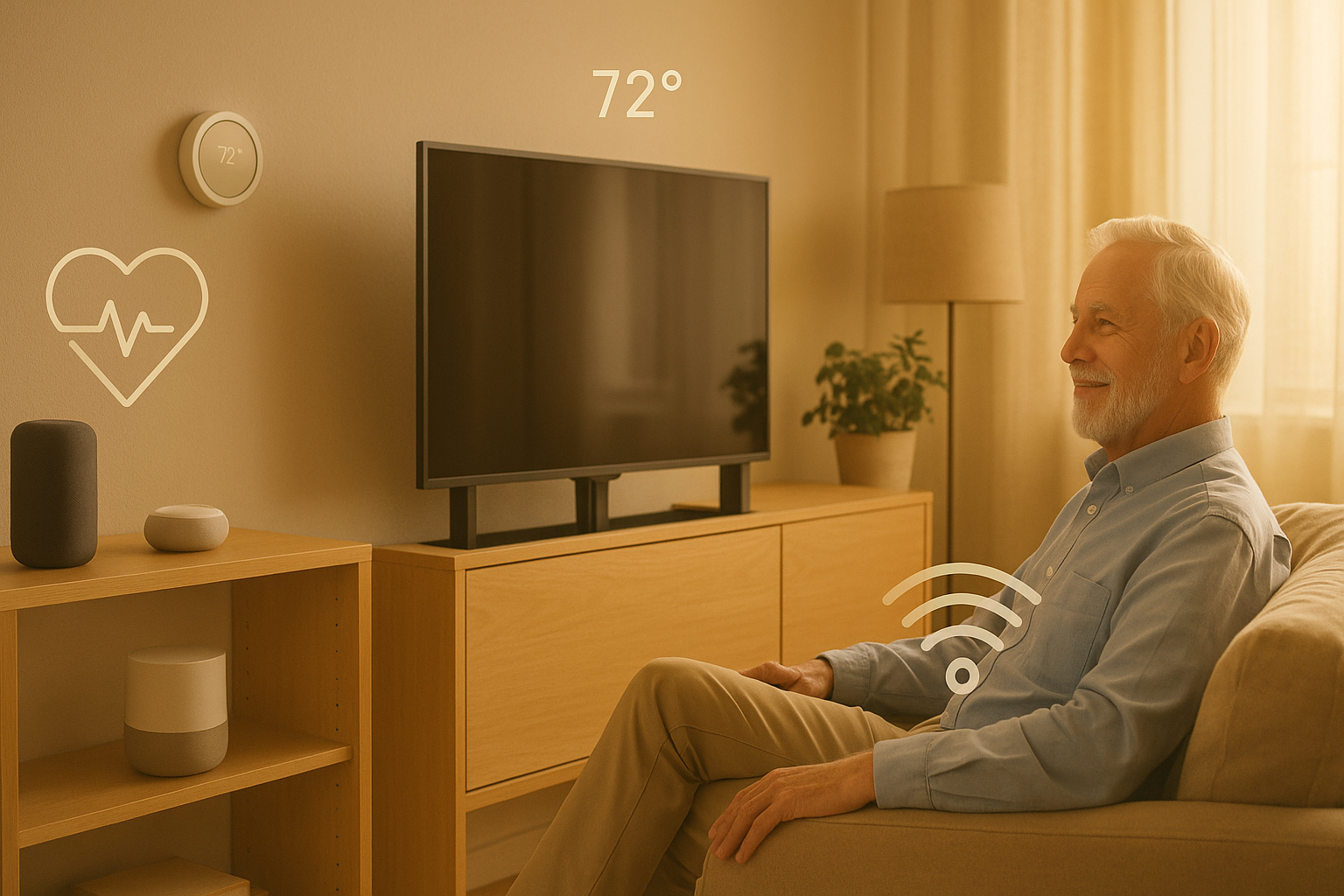
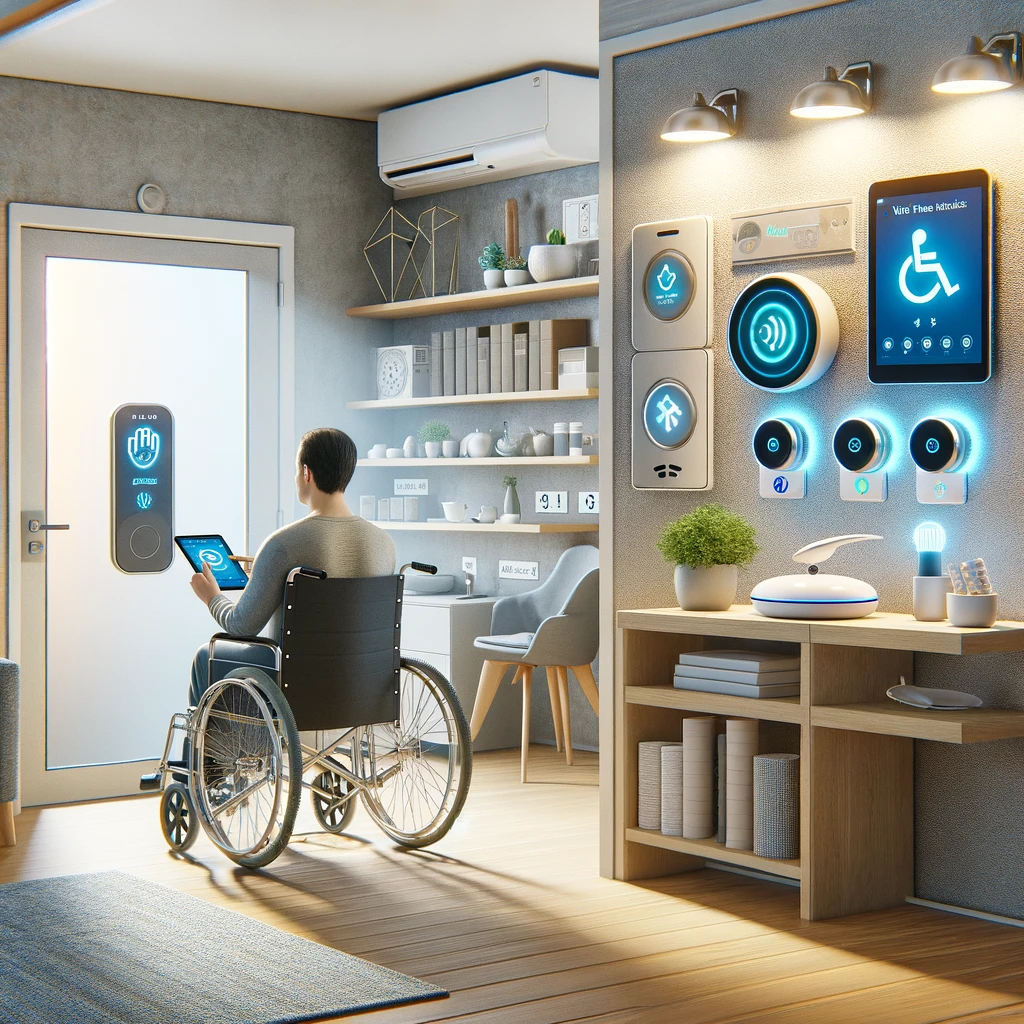
Most aging-in-place conversations begin with the wrong question. They ask which safety devices to add. The better question asks how a home can support someone for decades without ever looking like it was designed for decline.
That distinction shapes everything that follows. Affluent retirees now choose mountain homes as permanent residences, not seasonal escapes. They want the views, the quiet, and the life they have built. They do not want a house that reflects their age back at them every morning.
Thoughtful design solves this quietly. The right integration lets a home adapt as needs change, so the technology stays invisible and the independence stays intact. That is the standard we design toward, and it is achievable when planning starts early.
Build for the person you will become
The costliest mistake in aging-in-place design is timing. Families often wait until a fall or a diagnosis forces the issue, then retrofit under pressure. By then the walls are closed, the finishes are set, and every change fights the architecture.
Anticipatory design reverses that sequence. When we plan for future needs during construction, the infrastructure sits ready and dormant until the day it matters. A window prewired for motorized shading costs a fraction of the same shade added after drywall. A lighting system designed for future automation accepts new logic through programming, not demolition.
This approach fits mountain modern architecture especially well. Exposed beams, architectural concrete, and minimal trim make later changes expensive and invasive. Planning the pathways, power, and control locations during design protects both the budget and the finished aesthetic.
The point is not to install everything now. The point is to make the home ready, so a couple building at sixty is not trapped by those decisions at eighty.
Fall prevention that reads as good design
Falls are the leading injury risk for older adults, and most homes quietly invite them. Dark hallways, switches placed just out of reach, and shades that demand a stretch near a staircase all add small daily risks.
Lighting solves more of this than most people expect. Automated lighting removes the fumble for a switch in a dark room. Motion-activated pathways illuminate the route from bedroom to bathroom at low, comfortable levels overnight. Stair lighting turns a hazard into a clearly marked path.
Lutron lighting and shading control anchor this layer. Automated shades eliminate the reach toward tall windows, a common source of falls in homes with the floor-to-ceiling glass that defines mountain architecture. Scenes handle the whole room at once, so a single command replaces a walk across a dark space to reach a distant control.
DMF Lighting fixtures make this invisible. Clean, recessed integration delivers the light quality a home deserves without the institutional look of retrofit safety fixtures. The result protects the resident and preserves the room.
None of this announces itself. A guest sees a beautifully lit home. The resident experiences a home that quietly watches their footing.
Control that reduces effort, not dignity
Physical interfaces become harder to use with limited dexterity or vision. Small buttons, dense keypads, and app menus buried three screens deep frustrate anyone, and they can isolate an older adult from their own home.
Voice control removes that barrier. Natural language replaces the need to find, reach, and press a control. A spoken request adjusts lighting, temperature, and shades from anywhere in the room, including from the floor after a fall. Control4 handles this well, with interfaces that scale from simple voice commands to larger, clearer touch controls for those who prefer them.
Savant coordinates the whole picture. Its platform pulls lighting, climate, shading, and entertainment into one consistent experience, which reduces the cognitive load of remembering how each separate system works. One logic, one interface, one way of doing things. That consistency matters more with age, not less.
The design goal is subtraction. Every control we remove from the daily routine is one less point of friction between a person and their independence.
It also protects capability over time. A home that demands less mental effort today leaves more room for the resident to manage the things that truly need their attention. When the lights, shades, and temperature simply behave as expected, the person stays in charge of their day rather than negotiating with their house. That is a quiet form of respect, and it is one of the clearest measures of a system designed well.
Emergency response without the institutional feel
Traditional medical alert systems work, but they often feel clinical and sit apart from the home. Integrated response changes that relationship. When emergency systems connect to the home platform, a single event can trigger a coordinated response instead of a lone pendant call.
An alert can raise the lights to full, unlock the entry door for first responders, and notify family and emergency contacts at once. That coordination saves time when time matters, and it does so without a wall of medical hardware in the living room.
Crestron brings genuine depth here. Its heritage in commercial and healthcare building automation translates directly to reliable residential emergency logic. Savant’s coordination ties those responses into the rest of the home, so the systems act together rather than in isolation.
Access matters as much as alerts. When a first responder arrives, the home can unlock the right door, light the path to the resident, and disable interior locks that would slow help. Family members far away can confirm a response is underway from their phone. These details rarely make a product brochure, yet they decide how a hard moment actually unfolds.
This layer stays in the background until it is needed. That is the whole idea. Safety should be present without being a daily reminder of vulnerability.
Environmental safety at altitude
Colorado’s climate adds real considerations for older residents. Winter navigation is the obvious one. Icy walkways and snow-covered steps create hazards that automation can reduce through heated surfaces and lighting that activates as someone approaches.
Temperature management protects health during extended cold snaps and warm afternoons alike. Automated climate control holds safe, stable conditions and adjusts for the dramatic swings common at elevation. For homes that once served as seasonal properties and now house full-time residents, this reliability becomes essential rather than convenient.
Lighting supports health in a quieter way. DMF Lighting circadian solutions help maintain healthy sleep patterns, which often become disrupted with age and can worsen at altitude. Lutron shading manages the intense high-altitude sun, which reaches homes here with more force than most sea-level installations ever see.
These systems work best as a coordinated whole. Isolated products solve isolated problems. Integration lets the home respond to the season, the hour, and the person.
The Colorado layer most integrators miss
Mountain aging-in-place carries challenges that a suburban approach never encounters.
Single-level living, the traditional universal design ideal, is often impossible on a mountain lot. Multi-floor homes demand accessibility solutions and reliable vertical circulation planned from the start.
Remote locations sit far from healthcare. That distance raises the value of dependable telehealth infrastructure: reliable high-speed connectivity, private spaces with quality video and audio for consultations, and network capacity that supports connected health devices without dropping a call.
Altitude affects cardiovascular health, which makes stable indoor environments and dependable monitoring more than a comfort feature. And equipment itself behaves differently at elevation, where reduced cooling efficiency demands proper ventilation and thermal planning to keep systems reliable for years.
These are not add-ons. They are the difference between a system designed for Colorado and one simply installed here.
Independence is a design outcome, not a product
The best aging-in-place work is not a shopping list. It is a set of choices that let a capable adult stay capable in a home they love.
Automated morning routines ease the start of the day by bringing up lighting, adjusting temperature, and opening shades on a schedule. Optional wellness features can learn daily patterns and flag unusual changes for family, though these support human care rather than replace it, and we always frame them that way. The homeowner decides how much the home does and how much they do themselves.
That respect for dignity is why this work belongs with a partner who plans early. Architects, interior designers, and universal design consultants each shape decisions that either support or undermine long-term independence. When we join that conversation during schematic design, technology integrates with the plan instead of arriving as a late correction. When we join late, the options narrow and the costs climb.
We would rather help you build a home that never needs a visible retrofit. That is the quiet promise of doing this right, early, and with care for how the home looks and feels for the decades ahead.
Plan the home you will grow into
The families who get this right treat aging-in-place as a design discipline, not an emergency response. They plan the infrastructure while the walls are open, choose systems that adapt through programming, and keep the technology invisible so the home stays a home.
If you are building or renovating a mountain residence you intend to keep, schedule an aging-in-place consultation. We integrate assistive technology with genuine sensitivity to dignity and architecture, so your home supports long-term independence without ever looking like it was built for anything less than the life you want.