The same light that makes a painting glow is quietly taking it apart. Every hour a work spends under the wrong light spends a little of its life. Homeowners rarely see it happen. By the time fading shows, the loss is permanent.
This is the tension at the center of lighting a serious collection. You want the art seen. You also want it preserved for the next fifty years. Good lighting resolves that tension instead of choosing a side.
For the designers and consultants who specify these homes, that resolution starts long before a fixture ships. It starts with understanding what light actually does to art, and building control around those limits from the first drawings.
What standard lighting gets wrong
Most residential lighting treats art as one more surface to illuminate. That approach damages collections in three ways.
Ultraviolet exposure. UV carries enough energy to break down pigments, paper, and fabric dyes. It causes fading and embrittlement that no restoration fully reverses. Older halogen and many daylight sources emit meaningful UV.
Heat. Traditional lamps run hot. Heat near a canvas dries linseed oil binders and stresses wood panels and frames. Works on paper and photographs are even less forgiving.
Cumulative light dose. Even clean, UV-free light adds up. Conservators measure this in lux-hours, the intensity of light multiplied by the time a piece sits under it. Damage is cumulative and one-directional. A work never recovers the exposure it absorbs.
Conservation practice uses those measurements as working limits. Oil and acrylic paintings tolerate moderate illumination, often cited around 150 to 200 lux. Sensitive media hold up at far less. Works on paper, textiles, watercolors, and photographs are frequently kept near 50 lux, with annual exposure budgets to cap the yearly total.
Standard lighting ignores all of this. It runs bright, runs hot, and runs whenever someone flips a switch. A collection deserves better math.
Why Colorado light is harder on art
Colorado adds pressure that coastal and lowland homes never face.
Altitude intensifies ultraviolet radiation. UV climbs roughly 8 to 12 percent for every 1,000 feet of elevation, so a mountain home receives far more than a home at sea level. The state’s 300-plus days of annual sunshine compound the total. More clear days means more hours of exposure across the year.
Mountain architecture makes the problem worse by design. Floor-to-ceiling glass frames the views these homes are built for. That same glass floods interiors with direct and reflected sun, and snow reflection in winter drives ground-level UV higher still.
Low humidity is the quieter threat. Mountain interiors often sit at 25 to 35 percent relative humidity, well below the 40 to 55 percent range conservators prefer. Dry air shrinks wood panels and stretchers, cracks paint layers, and makes paper brittle. Swings between seasons stress a piece more than any single reading.
Put together, Colorado collections face stronger UV, longer exposure, and drier air than almost anywhere else. Protection here is not optional.
What conservation-grade fixtures actually do
The fixture is where preservation begins. This is where DMF Lighting earns its place in these projects.
Quality architectural LED solves the two most direct threats at the source. It emits essentially no ultraviolet, removing the UV problem rather than filtering it. It runs cool, so heat stress near the artwork drops sharply compared with halogen.
Color accuracy matters as much as safety. A collection lit by poor light looks wrong, and no amount of automation fixes bad color rendering. High-CRI LED, in the 90 to 95-plus range, renders reds, blues, and skin tones the way the artist intended. Better fixtures hold that accuracy as they dim, without the color shift that pushes cheaper LED toward green or amber at low levels.
Beam control finishes the job. Tight, well-aimed optics put light on the work and keep it off the wall and the viewer’s eyes. Aiming fixtures at roughly a 30-degree angle reduces glare and veiling reflections on glass and varnish. Adjustable heads let the lighting follow a collection as it grows and rotates.
Fixtures set the ceiling on quality. Control decides how much of that quality the art actually absorbs over its life.
Control turns fixtures into a preservation system
A great fixture left on all day still overexposes a sensitive work. Control is what turns good hardware into genuine protection. This is the layer most homes skip, and the one that separates a lit room from a conserved collection.
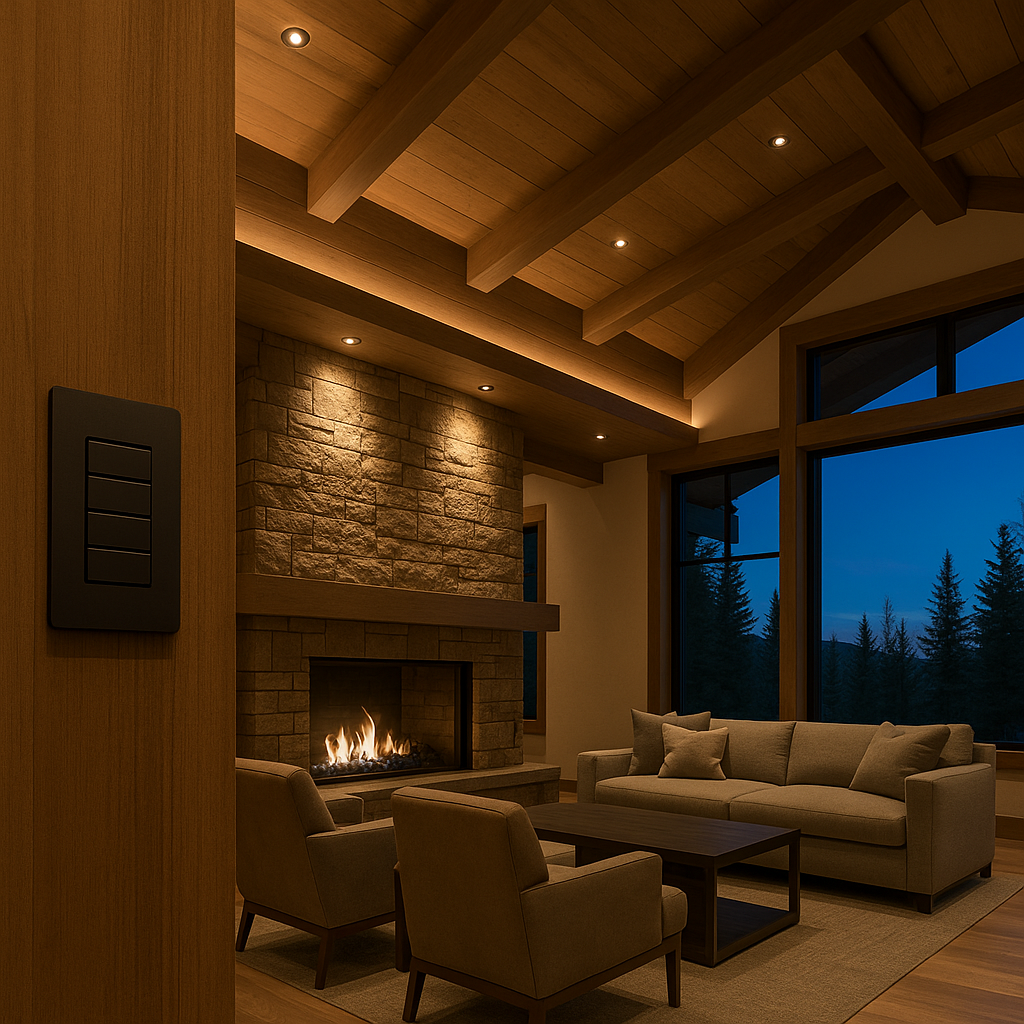
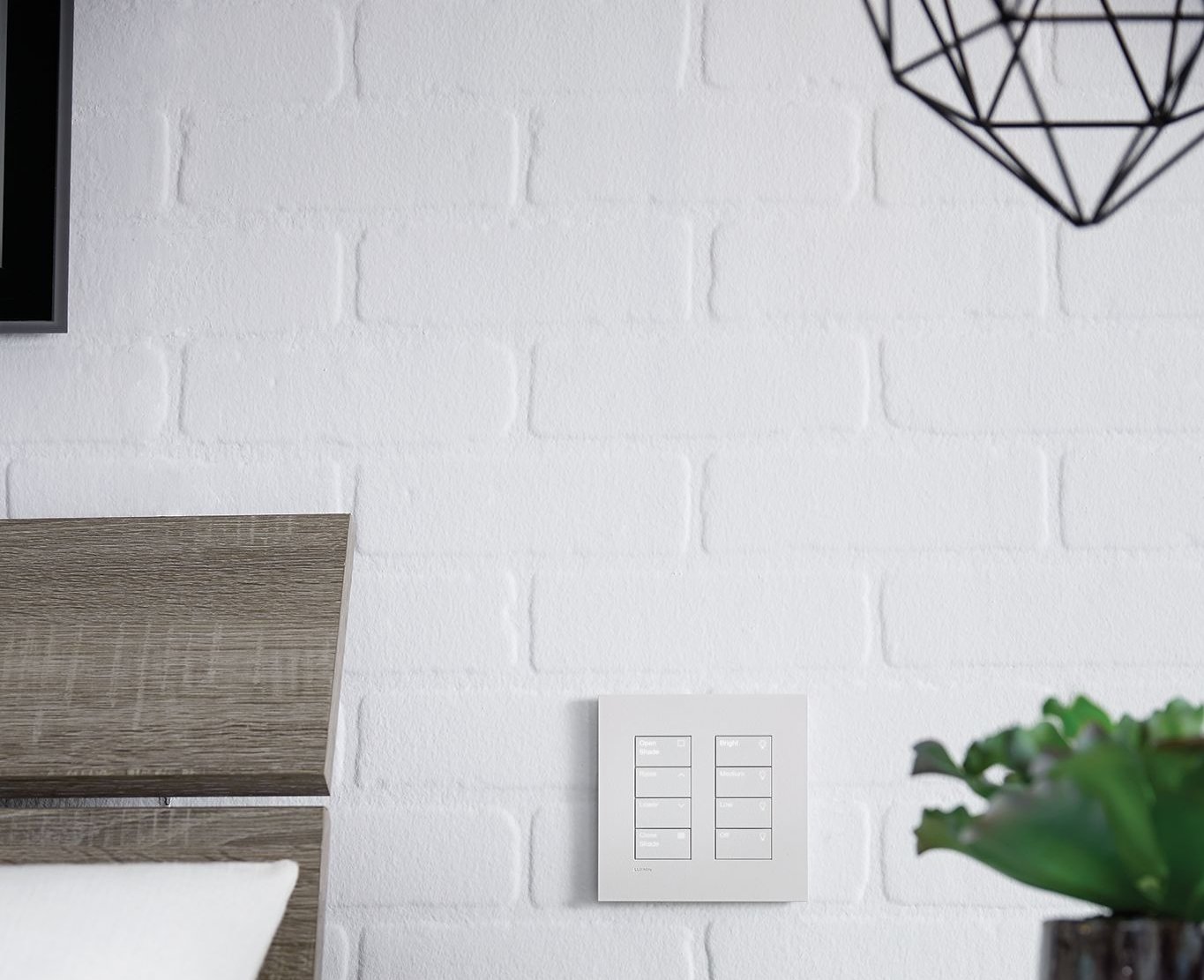
Lutron carries this layer in nearly every Xssentials project, and for good reason. Scene programming lets one space serve several purposes at different light levels. A viewing scene presents the collection at its best for guests. A daily scene runs lower for routine occupancy. A conservation scene holds sensitive works at minimum levels when no one is in the room.
Crestron adds exposure management through astronomical timeclock control. The system knows sunrise and sunset for the location and date, and adjusts automatically across the seasons. Programmed well, it caps how many hours a work sees full illumination, holding cumulative lux-hours inside conservation limits without anyone tracking a clock.
Control4 and Savant handle the one-touch transitions and whole-home coordination that make all of this livable. Owners will not manage six lighting modes by hand. They press one button, or the home shifts scenes on schedule, and the art stays protected without daily effort. Savant also ties lighting to shading and climate, so the whole environment responds together rather than as separate systems.
The result is a collection that presents beautifully on demand and rests in the dark the rest of the time. Owners see art at its best. The art sees far less light than it would under any manual setup.
Daylight is the threat control has to win
Artificial light is the part everyone plans for. Daylight causes more damage and gets managed least.
Sun through a wall of mountain glass delivers far more energy than any fixture, and it arrives with full UV. A single sunlit hour on an unprotected work can outweigh a careful evening of gallery lighting. Any serious plan has to control the windows, not just the fixtures.
Motorized shading solves this without asking owners to choose between their art and their views. Lutron shades track the sun’s position and close against direct exposure on vulnerable walls, then reopen once the angle moves on. Owners keep the vista. The art loses the hit.
Savant coordinates shades with lighting so the two work as one system. As shades close and daylight drops, fixtures compensate to hold presentation quality steady. As the sun moves off a wall, shades open and fixtures ease back. The collection stays evenly lit while total UV dose falls.
This coordination is exactly what manual shades and manual switches cannot deliver. People forget. Automation does not.
Protection continues while the home sits empty
Colorado collections face a challenge coastal homes rarely do. Many of these residences sit vacant for months across the year. That absence cuts both ways.
Vacancy helps preservation in one respect. An empty home means fewer viewing hours, so a well-programmed system can hold the collection in near-darkness for long stretches and bank the exposure savings.
The environment is the real risk during those months. Dry mountain air and seasonal temperature swings work on a collection whether anyone is home or not. A cracked panel or lifted paint layer does not wait for the owners to return.
Integrated monitoring closes that gap. The same platform that runs lighting and shades watches humidity and temperature, holds climate steady, and sends an alert the moment conditions drift outside safe ranges. Owners learn about a problem while it is still small, from anywhere, rather than discovering damage on their next visit.
For designers and consultants: bring integration in early
For the trade professionals specifying these homes, timing decides how well any of this works. Art lighting fails most often not from bad fixtures but from late decisions.
Conservation-grade lighting depends on choices made during design development, not finish. Fixture locations, aiming angles, and mounting details all need to align with where the collection will hang. Retrofitting proper art lighting after drywall means opening ceilings, and the cost climbs fast.
Bringing an integration partner in during design development lets the lighting plan, the shading plan, and the collection plan develop together. Aiming angles get set against actual wall locations. Shading motorization gets roughed in at every window that threatens a piece. Control scenes get scoped before programming ever starts.
This is collaboration, not handoff. The art consultant knows the collection and its conservation needs. The interior designer owns the aesthetic and the room. Xssentials translates both into fixtures, control, and environmental protection that hold up. Each discipline stays in its lane, and the client gets a result no single trade delivers alone.
The homes where this works best are the ones where these conversations happen early, while decisions are still cheap and everything can still change.
Presentation and preservation, without the compromise
A serious collection asks two things of its lighting at once. Show the work at its best. Protect it for the long term. Standard residential lighting forces a choice between them. A conservation-grade approach refuses to.
The pieces fit together in a clear order. Fixtures that emit no UV, run cool, and render color faithfully. Control that presents the collection on demand and rests it the rest of the time. Shading that wins the daylight fight without sacrificing the view. Monitoring that guards the environment even when the home sits empty.
Built as one system, that approach lets a collection live in a home the way it deserves to. Seen fully. Preserved completely.
Schedule an art collection lighting consultation. Xssentials works alongside your art consultant and interior designer to deliver museum-grade illumination that protects your investment while showing it at its finest.